
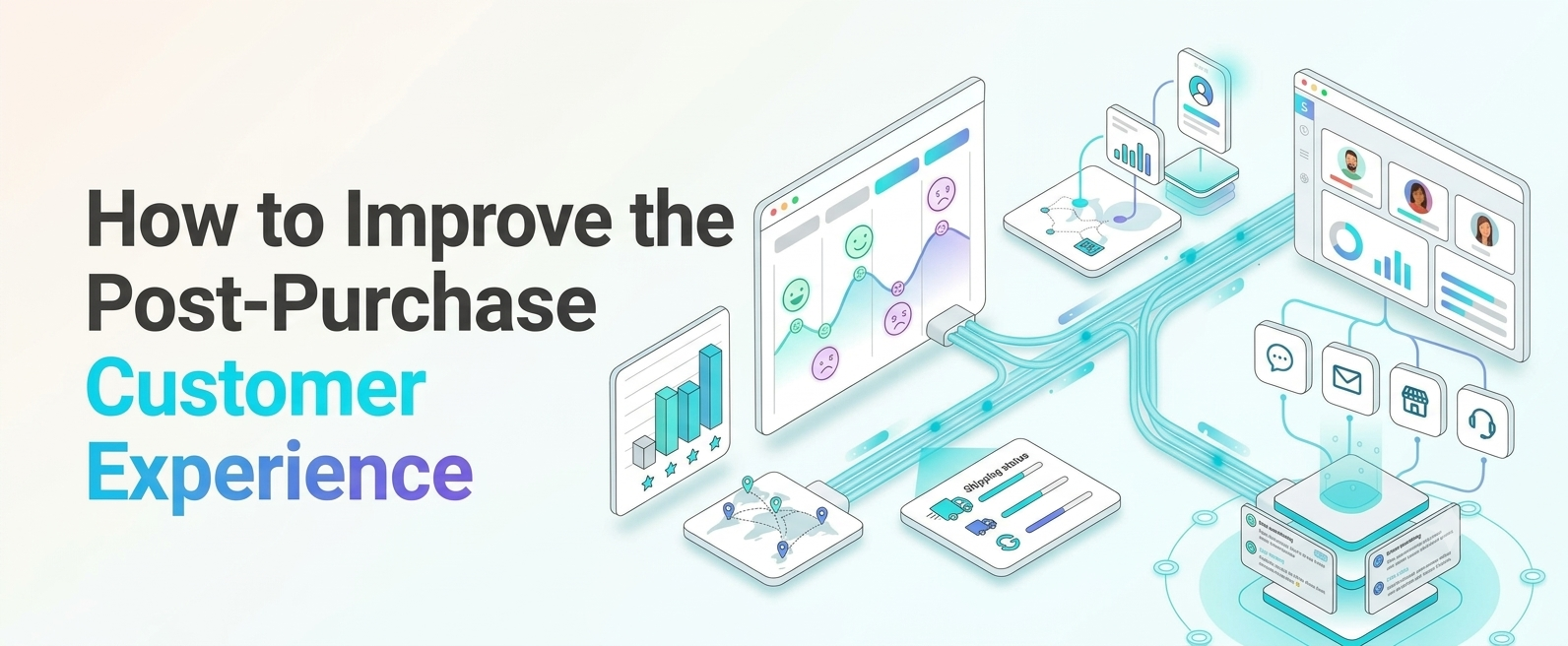
You buy a jacket online on a Tuesday night. The confirmation email lands, but there’s no delivery date in sight. Three days pass, and tracking is still stuck on a vague “in transit.”
When the package finally shows up, it’s the wrong size. You go to return it, only to find the returns page buried somewhere in the footer. The form demands an order number you can’t locate, and customer support hits you with a “we’ll reply in 5 business days.”
Technically, the store got their sale. But that customer? They’re already shopping somewhere else next time.
Most brands pour everything into making the sale, completely ignoring what happens after checkout – even though that’s where customer trust actually lives or dies. This is where working with a UX design agency pays off. They help you spot these quiet dealbreakers, smooth out post-purchase hiccups, and make the whole experience feel effortless. Here’s how to do it right.
What Makes a Great Post-Purchase Experience?
A great post-purchase experience makes customers feel they made a good choice. It answers questions before they’re asked. And when something goes wrong, it makes the fix easy.
Think of it as a handful of moments, each one a chance to build confidence or create doubt.
Confirmation. Right after paying, people want to know it worked. What did I buy? What did I pay? What happens now? A clear confirmation page and email, with a delivery estimate and a way to get help, does more good than any promotion.
Honest expectations. Most frustration comes from the gap between what people expected and what happened. If delivery can take a week, say a week. If a free trial turns into a paid plan on a certain date, spell it out. It’s much easier to meet honest expectations than optimistic ones.
Updates without chasing. Tracking, status messages and early warnings about delays all calm people down. Keep them useful, though. Marketing emails dressed up as order updates wear trust away fast.
Delivery or onboarding. For a physical product, that’s the unboxing. For software or a service, it’s the first login and the first thing that works. Either way, first impressions stick.
Returns and changes. How easily someone can return an item, cancel a subscription or change a booking says a lot about a business. Hiding the process might cut returns in the short term. It also cuts repeat purchases.
Follow-up. A well-timed feedback request or a genuinely helpful tip shows the relationship didn’t end at checkout. A pushy upsell shows the opposite.
The thread running through all of this is uncertainty. Once customers have paid, they’re waiting on you. Every unclear message adds to the worry.
How Can You Improve Customer Support?
Support is where the post-purchase experience shows its cracks. It’s also where you can learn the most, if you pay attention.
Make help easy to find. Put it where problems happen: the order page, the confirmation email, the account area. If someone has to hunt for a contact option, you’ve already lost some goodwill. On a phone, it matters even more.
Let people solve simple things themselves. Tracking, returns and account changes shouldn’t need a conversation. But self-service only works if it’s built around the questions customers really ask, in their words. A help centre organised by internal department rarely is.
Keep a human within reach. Chatbots are fine for routine queries. But someone stuck in a loop with no way out will remember that far longer than any clever feature. Make the handover to a person simple.
Don’t make people repeat themselves. Explaining the same problem to three different agents is maddening. Your team should see the order history and past conversations, whatever channel the customer used.
Treat support data as research. Tickets, chat logs and reviews are full of clues. If hundreds of people ask where their order is, you may not have a support problem at all. Your tracking page might be the real issue. Support shows you where things break, and design fixes the cause.
Measure more than speed. Response time matters, but a fast reply that doesn’t solve anything isn’t good service. Look at whether problems get fixed the first time, and how often people come back about the same thing.
How Can a Customer Experience Agency Help?
Post-purchase problems rarely belong to one team. Marketing owns the emails. Operations handles delivery. Logistics runs returns. Support answers the phones. Each group can do its job well while the customer still gets a disjointed experience.
That’s where a customer experience agency can help. Not by adding hands, but by adding perspective. It looks at the whole journey the way the customer sees it.
A research-led one will usually:
- Map the journey from the customer’s point of view, showing where expectations and reality part ways
- Run interviews and surveys to learn what people need after they buy
- Dig into support data, analytics and reviews for patterns
- Look at the processes behind the screens, since plenty of failures happen in fulfilment or policy, not the interface
- Help you decide what to fix first
- Test changes with real customers and keep measuring
The real benefit is a fresh pair of eyes. Your team knows how the returns process is meant to work. Watching a stranger try it for the first time tells a different story.
If you’re choosing a partner, look for one that starts with research, not a ready-made solution. Ask how they’ll involve real customers and how they’ll measure success.
Why Is User Experience Design Important?
It’s easy to think of post-purchase as an operations issue. But most of it reaches the customer through design: the confirmation page, the emails, the tracking screen, the returns form, the help centre. Get those wrong and even good service feels clumsy.
Good design does a few things at once. It cuts effort, so checking a status or starting a return takes seconds. It cuts contacts, because a clear order page stops many “where’s my order?” messages before they start. It builds trust through plain, honest information. And it works on a phone, which is where most people check on an order, often distracted and a bit stressed.
Picture two returns experiences. On the first site, the customer opens their order, clicks the jacket, and gets a pre-filled form and a downloadable label. On the second, they email support, wait, and fill out a paper form. Same product. Very different feelings about the brand.
Because these problems cover research, strategy, interface design and testing, many businesses bring in a user experience design agency. The good ones don’t leap straight to redesigning screens. They start by understanding what customers struggle with, design around it, and test before launch. That avoids the classic trap of a beautiful redesign that solves nothing.
How Can You Build Customer Loyalty?
Points schemes and discount codes don’t create loyalty on their own. It comes from experiences that keep meeting expectations, and the post-purchase stage is where most of that happens.
Do what you said you’d do. On time, at the price quoted, on the terms stated. Reliability beats freebies.
Handle problems well. Trouble is unavoidable. A customer whose issue gets fixed quickly and politely can end up more loyal than one who never had a problem.
Help people get value. With software or subscriptions especially, customers stay when they succeed. Good onboarding and useful tips matter. Someone who never really uses what they bought is already halfway out the door.
Personalise with care. Remembered preferences and easy reordering are welcome. Creepy or manipulative tactics aren’t. Let people see and control how their data is used.
Listen, then show you did. Keep surveys short, act on the answers, and tell customers what changed. That turns feedback into a relationship.
Reward what people actually value. Some customers want early access, others want convenience or better service. Research beats guessing.
Repeat purchases, retention and referrals are good signs, but they only tell you whether loyalty is rising or falling. To learn why, you need customer research and testing.
What Are the Final Takeaways?
The purchase isn’t the finish line. It’s when customers start finding out whether you can be trusted.
- Reduce uncertainty. Clear confirmations, honest timelines and proactive updates go a long way.
- Make help easy to find, with a real person available when it counts.
- Treat support data as research. The questions people ask show where things break.
- Look at the whole journey. A customer experience agency can connect the gaps between teams.
- Design the details. A user experience design agency can help make sure emails, tracking and returns are built around real needs and tested.
- Keep improving. Understand, fix, test, measure, repeat.
Businesses that give the post-purchase stage the same care they give acquisition tend to see fewer support contacts and more confident customers. A research-led UX and CX partner can help you find where your experience is letting people down, and test the fixes with the people who matter most.